
Do Reusable Items Actually Save You Money? A Budgeting Breakdown
In a world of convenience, single-use products are everywhere, from plastic baggies to bottled water to disposable ice. They feel cheap in the moment, but those small costs add up fast. Switching to reusable alternatives requires a bit more upfront spending, but the long-term savings can be substantial. Let’s break down a few common swaps and see whether they really pay off over time.
The Math Behind Reusables
The core principle of reusable budgeting is simple: pay more once instead of paying a little, over and over, forever. A disposable item has a low sticker price but an infinite replacement cycle. A reusable item costs more initially but spreads that cost across hundreds or thousands of uses. The longer you use it, the cheaper each use becomes. The key is choosing durable products that actually last, because a reusable item that breaks quickly defeats the entire purpose.
Food Storage: Tupperware vs. Disposables
 Reusable food storage containers are one of the easiest money-savers to justify. A quality set of containers might cost twenty to forty dollars, while plastic wrap, foil, and disposable bags can run a household well over a hundred dollars a year. Beyond the direct savings, good containers help you store leftovers properly, which means less food waste, another hidden budget drain. Choose sturdy, freezer- and microwave-safe containers, and a single set can last for years, paying for itself many times over.
Reusable Cooler Ice Packs vs. Bagged Ice
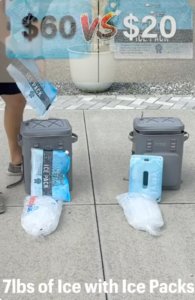 This is a swap people often overlook. If you regularly use a cooler for work lunches, road trips, sports practices, or weekend outings, bagged ice is a recurring expense that quietly drains your wallet, often a few dollars per bag, several times a month. Reusable ice packs eliminate that cost entirely. Icepaca cooler ice packs are a smart pick here. After hands-on testing comparing cooling performance over time, they hold their temperature remarkably well, rivaling premium brands like Yeti at a far more budget-friendly price. They freeze solid, last for hours, and are durable and leak-resistant, so no soggy sandwiches or watery messes. Buy them once, refreeze them indefinitely, and you’ll never pay for ice again. For frequent cooler users, the savings stack up season after season.
Reusable Water Bottles vs. Bottled Water
The bottled water habit is one of the most expensive conveniences out there. A daily bottled water purchase can cost several hundred dollars a year, while a good reusable bottle costs a fraction of that once and lasts for years. Pair it with a basic faucet filter and you get clean, cold water on demand for pennies per fill. The payoff is fast and the ongoing savings are significant.
Breakeven Bottom Line
Reusable items aren’t just an eco-friendly choice, they’re a sound financial strategy. Tupperware, reusable ice packs, and water bottles all pay for themselves quickly and keep saving long after. The trick is investing in durable, quality products upfront, then letting time and repeated use do the budgeting work for you.
 Mike here, thanks for stopping in to Rapid Charting a blog dedicated to the ever-evolving markets. We blog and chart the latest movers and shakers on the Global Playing Field of Business.